

CAH · 21-hydroxylase deficiency · Non-classic CAH
Congenital adrenal hyperplasia, managed for adult life.
CAH is an inherited condition in which an enzyme the adrenal glands need, most often 21-hydroxylase, works poorly or not at all. Cortisol production falls, the pituitary pushes harder, and the adrenals divert that effort into androgens. Classic CAH is diagnosed at birth; the milder non-classic form often surfaces in teenagers and adults as acne, excess hair, irregular periods or infertility. Dr. Hasan is experienced in managing both forms in adults.
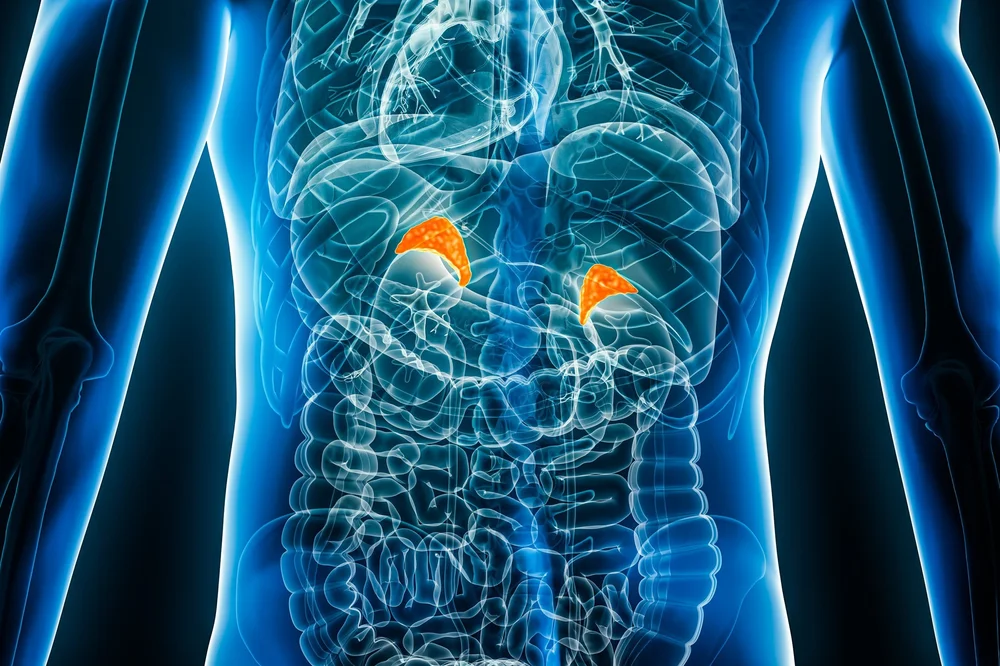
What goes wrong
The enzyme block sits in the pathway that turns cholesterol into cortisol and aldosterone. The precursor that builds up, 17-hydroxyprogesterone, is both the diagnostic marker and the source of the excess androgens.
In classic CAH aldosterone is also lost (salt-wasting). In non-classic CAH cortisol and aldosterone are adequate; only androgens are excessive.
Symptoms and findings
How CAH presents in adults
- 1Acne; excess facial hair in women
- 2Scalp hair thinning in women
- 3Irregular or absent periods; infertility; PCOS-like picture
- 4In men: testicular adrenal rest tumors and reduced fertility
- 5Enlarged adrenal glands; adrenal crisis risk in classic CAH
- 6Weight gain, insulin resistance and bone loss from long-term steroid treatment
- 7Short adult height after early growth spurt (classic CAH)
Non-classic CAH is found in about 1 to 2 percent of women evaluated for excess hair or irregular periods, and is often mistaken for PCOS.
Treatment
- Classic CAH: lifelong glucocorticoid replacement (hydrocortisone, or carefully dosed prednisolone or dexamethasone) plus fludrocortisone for salt-wasting, with doses set to control androgens without causing Cushing-like side effects. Stress dosing rules and an emergency injection kit are essential.
- Non-classic CAH: treatment only when symptoms warrant it. Combined oral contraceptives or anti-androgens for hair and acne; low-dose glucocorticoids mainly when fertility is the goal.
- Fertility: most women with non-classic CAH conceive without treatment or with brief glucocorticoid therapy. Partner carrier testing and genetic counseling are offered.
- Newer therapy: crinecerfont, a CRF1 receptor antagonist approved in 2024, lowers androgens in classic CAH and allows glucocorticoid doses to be reduced toward physiologic levels.
- Long-term monitoring: blood pressure, glucose, lipids, bone density, and testicular ultrasound in men, to catch the complications of both the disease and its treatment.
Dr. Hasan is experienced in the adult management of classic and non-classic CAH, including transition from pediatric care, fertility planning, stress-dose education and minimizing long-term steroid exposure.
Common questions
I was told I have PCOS. Could it be non-classic CAH?
Possibly. The two look alike. A single early-morning 17-hydroxyprogesterone, drawn in the first half of the cycle, screens for it, and an ACTH stimulation test confirms borderline results.
Do I need to treat non-classic CAH if I feel fine?
No. Treatment is symptom-driven. Many people need no medication at all, or only treatments aimed at skin or hair.
Is CAH an adrenal emergency risk?
Classic CAH, yes: the same sick-day rules and emergency hydrocortisone apply as in Addison's disease. Non-classic CAH does not usually carry this risk unless long-term steroids have suppressed the adrenals.
Will my children have CAH?
CAH is recessive: a child is affected only if both parents pass on a faulty gene. Carrier testing of a partner clarifies the risk.
Related conditions
In Wexford or by telehealth in PA and OH