

Calcium · Parathyroid · Vitamin D · Bone
Calcium and parathyroid care, done right.
Four parathyroid glands the size of rice grains sit behind the thyroid and set the calcium level in your blood. When calcium reads high or low, the parathyroid glands, vitamin D and the kidneys are the usual suspects. Dr. Hasan is experienced in sorting out calcium problems and the bone and kidney issues that come with them.
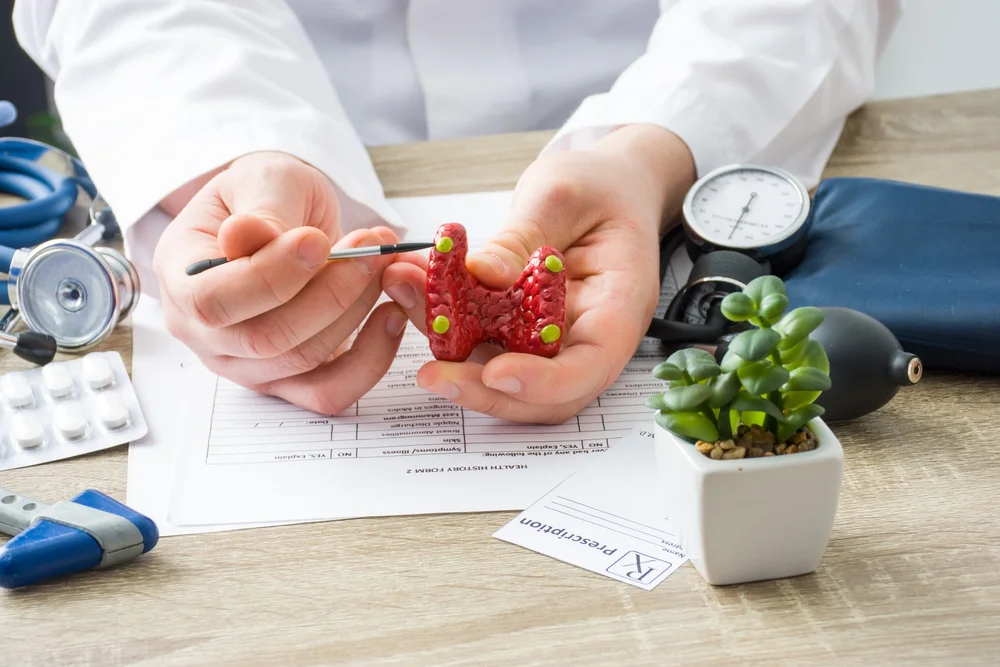
How calcium is controlled
Parathyroid hormone (PTH) raises blood calcium by releasing it from bone, holding onto it in the kidneys and activating vitamin D so the gut absorbs more. Calcium in turn switches PTH off. Measuring both together is the key test: the pairing tells you where the problem is.
A healthy feedback loop. In primary hyperparathyroidism the loop is broken: PTH stays high despite high calcium.
Conditions we treat
Hyperparathyroidism
An overactive gland, usually a benign adenoma, raises calcium: kidney stones, bone loss, fatigue and brain fog. Often curable with a short operation.
Hypoparathyroidism
Too little PTH, most often after neck surgery: tingling, cramps and low calcium that needs careful, lifelong management.
Vitamin D deficiency
Common in Western Pennsylvania winters. Low vitamin D lowers calcium absorption, raises PTH and weakens bone.
Osteoporosis
Low bone density and fragility fractures. Calcium and parathyroid testing is part of every osteoporosis workup.
Kidney stones
Recurrent calcium stones can be the first sign of a parathyroid or vitamin D problem.
Hypercalcemia of other causes
Medications, granulomatous disease, high calcium intake, familial hypocalciuric hypercalcemia and, rarely, cancer. Each has a distinct test pattern.
How we evaluate calcium
The core panel is calcium (corrected for albumin, or ionized), PTH, 25-hydroxyvitamin D, phosphorus, magnesium, kidney function and a 24-hour urine calcium. Interpreted together they distinguish parathyroid disease from vitamin D problems, kidney disease, medication effects and the rare familial conditions that should never be operated on. Imaging of the parathyroid glands comes only after the diagnosis is biochemically certain, to guide the surgeon rather than to make the diagnosis.
Where calcium problems show up
- 1High calcium: fatigue, brain fog, low mood, poor sleep
- 2Low calcium: tingling around the mouth and fingertips
- 3Parathyroid glands behind the thyroid
- 4Kidney stones; excess thirst and urination with high calcium
- 5Constipation, nausea, heartburn or pancreatitis with high calcium
- 6Muscle cramps and spasms with low calcium
- 7Bone pain, bone loss and fractures
Dr. Hasan is experienced in evaluating high and low calcium, primary and secondary hyperparathyroidism, post-surgical hypoparathyroidism and vitamin D disorders, and works with experienced parathyroid surgeons when an operation is the right answer.
Explore
In Wexford or by telehealth in PA and OH