

Adrenal glands · Cortisol · Aldosterone · Adrenaline
Adrenal disorders, sorted out.
Two small glands above the kidneys make the hormones that run your blood pressure, stress response, salt balance and energy. When they make too much or too little, the symptoms are real but easy to miss. Dr. Hasan is experienced in testing for and treating the full range of adrenal conditions.
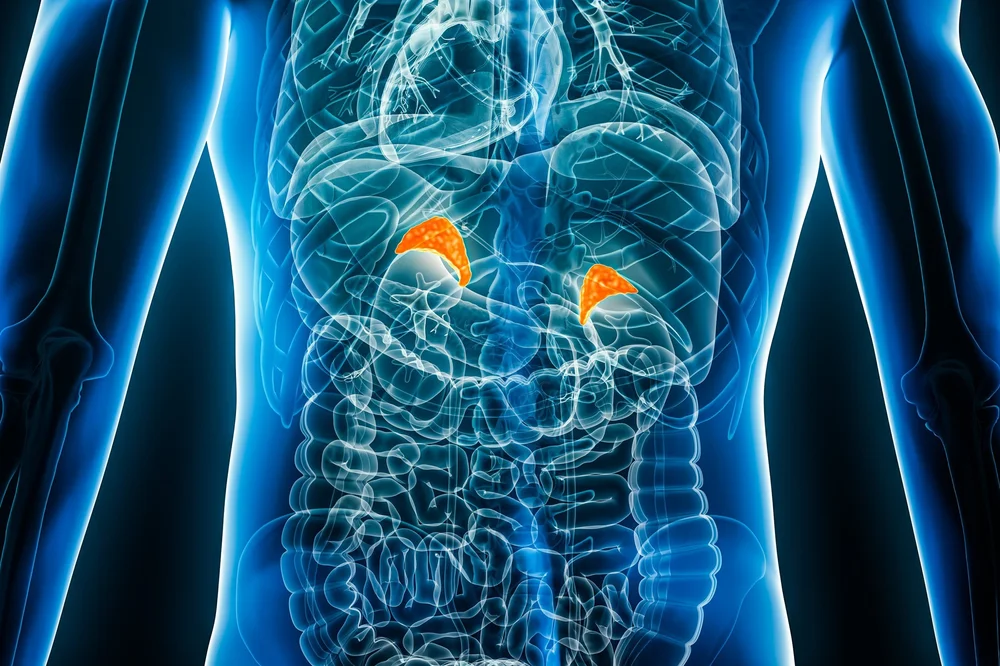
What the adrenal glands do
Each adrenal gland has an outer cortex and an inner medulla. The cortex makes cortisol (stress, blood sugar, blood pressure), aldosterone (salt, potassium and blood pressure) and androgens. The medulla makes adrenaline and noradrenaline. The pituitary gland controls cortisol production through ACTH, so adrenal problems sometimes start in the brain.
The HPA axis. Cortisol feeds back to switch off CRH and ACTH, which is why both the adrenal and the pituitary are tested together.
Conditions we treat
Cushing's syndrome
Too much cortisol: central weight gain, round face, easy bruising, high blood pressure and sugar. Also caused by steroid medications.
Addison's disease
Too little cortisol and aldosterone: fatigue, weight loss, salt craving, low blood pressure, darkened skin. Treatable, but an emergency if missed.
Primary aldosteronism
Too much aldosterone: the most common curable cause of high blood pressure, often with low potassium.
Pheochromocytoma
An adrenaline-producing tumor: spells of pounding heartbeat, sweating, headache and blood pressure surges.
Adrenal nodules
A growth found by chance on a CT or MRI. Most are harmless; all need hormone testing and a plan.
Congenital adrenal hyperplasia
An inherited enzyme deficiency that shifts hormone production toward androgens. Adults need lifelong, careful management.
How adrenal testing works
Adrenal hormones follow daily rhythms and respond to stress, so a single random blood test often misleads. Testing is chosen to match the question: a late-night salivary cortisol or overnight dexamethasone test for excess cortisol, an early-morning cortisol and ACTH stimulation test for deficiency, a renin-aldosterone ratio for aldosterone excess, and plasma or urine metanephrines for adrenaline-producing tumors. Imaging comes after the hormone answer, not before, because small harmless nodules are common and can send the workup in the wrong direction.
Dr. Hasan is experienced in evaluating abnormal cortisol, aldosterone and metanephrine results, incidental adrenal nodules, and steroid tapering after long-term prednisone, with care coordinated with surgery and radiology when needed.
Common questions
Is "adrenal fatigue" a real diagnosis?
Adrenal fatigue is not a recognized medical condition and no test confirms it. Real adrenal insufficiency, however, is serious and measurable, and persistent fatigue deserves a proper evaluation that also looks at thyroid, sleep, iron, blood sugar and mood.
Can I stop prednisone on my own?
Not after more than a few weeks of use. The adrenal glands become suppressed and need a gradual taper, sometimes with testing along the way.
Do adrenal nodules need surgery?
Most do not. Surgery is considered when a nodule makes excess hormone, is large or has worrying features on imaging.
Explore
In Wexford or by telehealth in PA and OH