

Continuous glucose monitoring · Dexcom · FreeStyle Libre · Eversense
See your glucose in real time.
A continuous glucose monitor replaces finger sticks with a reading every few minutes, and turns a single A1c into a picture of how food, exercise, sleep and medication actually affect you.
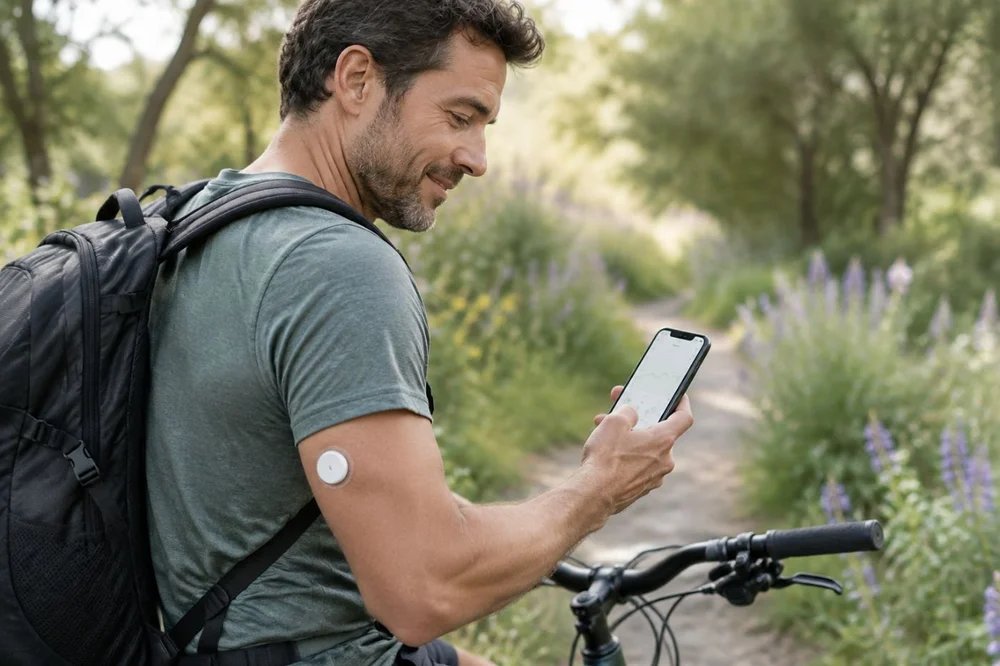
How a CGM works
A small sensor sits just under the skin of the arm or abdomen and measures glucose in the fluid between cells. Readings go to your phone or a receiver, with alerts before glucose goes too low or too high. Sensors are changed every 10 to 15 days, or once a year for an implanted sensor.
Current options
Dexcom G7
10-day sensor with a 12-hour grace period. Works with most insulin pumps and automated insulin delivery systems.
FreeStyle Libre 3 Plus
15-day sensor, among the smallest available. Also pairs with several pumps.
Eversense 365
Implanted sensor placed in the office that lasts a year, with a removable transmitter.
Stelo and Lingo
Over-the-counter sensors for adults not using insulin, useful for seeing how meals and habits affect glucose.
What the data shows
Research shows that CGM use lowers A1c and reduces hypoglycemia in type 1 diabetes and in type 2 diabetes, including in people who do not use insulin. Seeing the effect of a meal or a walk within minutes changes habits in a way that a quarterly lab result rarely does.
- Time in range (70–180 mg/dL): the goal for most adults is above 70%
- Time below range (under 70 mg/dL): below 4%, and below 1% under 54 mg/dL
- Glucose management indicator (GMI): an estimate of A1c from the sensor data
- Variability: steadier glucose is easier on blood vessels and on how you feel

Getting a CGM
Medicare and most insurers cover CGM for anyone who uses insulin, and for people with a history of problematic low blood sugar. Coverage for type 2 diabetes without insulin is expanding, and over-the-counter sensors cost roughly $50 to $100 a month without insurance. Dr. Hasan’s office handles the prescription and prior authorization, and helps you choose the sensor that fits your phone, your pump and your routine.
Dr. Hasan is experienced in starting and interpreting CGM for type 1 diabetes, type 2 diabetes, pregnancy and hypoglycemia, and in connecting sensors to insulin pumps.
Common questions
Does the sensor hurt?
Insertion takes a second with a spring-loaded applicator and most people feel little or nothing. The sensor is not noticeable during daily life, showers or exercise.
How accurate is it?
Modern sensors are accurate enough to dose insulin from. Readings lag finger sticks by a few minutes when glucose is changing quickly, which matters mostly during treatment of a low.
Do I still need finger sticks?
Rarely. A finger stick is useful when symptoms do not match the sensor reading or during the first hours after a new sensor starts.
Can I try a CGM short term?
Yes. A two-week trial sensor is a common way to learn how your body responds to food and activity, even without diabetes medication.
Related pages
In Wexford or by telehealth in PA and OH