

Your great-grandparents worried about getting enough food. You worry about getting too much. The same thing has happened to information, and we have barely noticed.
For most of history, information was scarce and valuable. Today it is abundant, free and engineered to be irresistible. In one 2024 survey, Americans reported checking their phones about 205 times a day. Each glance is small. Together they add up to a mind that never fully rests, and a nervous system that behaves as if something is always wrong.
The investor Naval Ravikant has a phrase for the remedy: "Meditation is intermittent fasting for the mind." I would extend it. What most of us need is not one more productivity app but a low-information diet: fewer inputs, chosen deliberately, with regular periods of none at all.
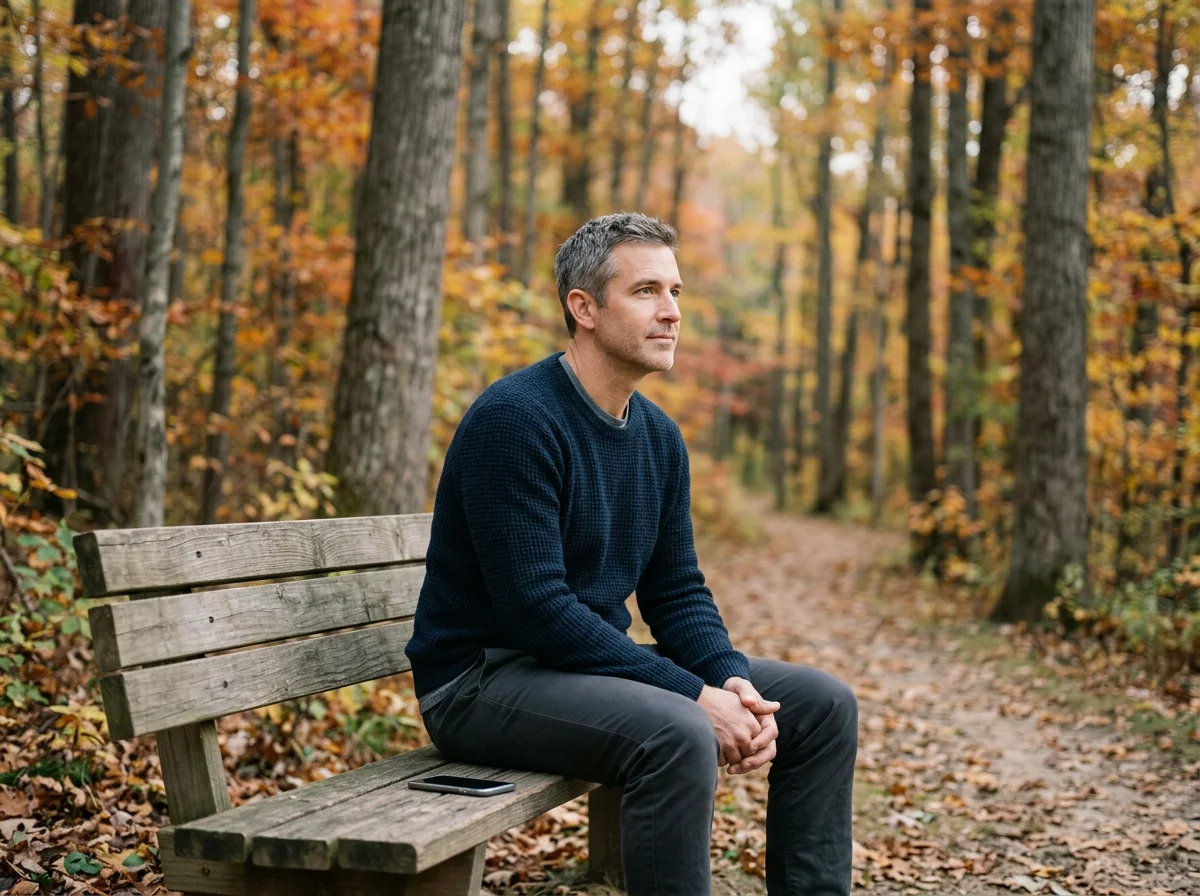
Why information overload feels like anxiety
The brain's threat system did not evolve for a world in which a war, a recession and a celebrity scandal arrive in the same 30 seconds, every hour, from every direction. News and social media are optimized for engagement, and the most engaging content is alarming, outrageous or envy-inducing. Each notification is a small jolt of arousal. The stress system, built for occasional lions, responds to a constant stream of paper tigers.
In clinic, the effects show up in ways patients rarely connect to their phones: trouble falling asleep, waking at 3 a.m. with a racing mind, afternoon fatigue, poor concentration, stress eating and a vague sense of being behind. Chronic stress raises cortisol, which over time worsens blood sugar, belly fat, blood pressure and sleep quality. You cannot out-supplement a nervous system that is on alert 16 hours a day.
Ravikant described the predicament precisely: "The modern struggle is fighting weaponized addiction." On one side, an individual with willpower. On the other, teams of engineers whose job is to capture attention. That is not a fair fight, so do not try to win it with willpower alone. Change the environment.
Via negativa: improve by subtracting
The essayist Nassim Nicholas Taleb popularized an old idea, via negativa: that we often improve things more reliably by removing what harms than by adding what helps. In medicine, stopping smoking does more than any vitamin. In attention, deleting one app often does more than any meditation course.
The evidence supports subtraction. In a large randomized experiment published in the American Economic Review in 2020, people paid to deactivate Facebook for four weeks gained about an hour a day of free time, reported modest but real improvements in happiness and life satisfaction, and became less politically polarized. In a smaller 2018 study, college students who limited social media to 30 minutes a day for three weeks reported less loneliness and depression than those who did not.
Notice what did not happen: no one in these studies reported missing anything important.
Signal versus noise
A useful test for any input: will this change a decision I make this month? Your lab results, your child's school email, a book on a skill you are learning: signal. Most cable news, most political commentary, most feeds and nearly all comment sections: noise. Noise is not harmless filler. It crowds out signal, fragments attention and quietly sets your mood for the day.
Political news deserves special mention. Staying informed is a civic duty. Staying inflamed is not. A weekly summary from a reputable source keeps you informed at a fraction of the emotional cost of a live feed.
A practical low-information diet
Turn off nonhuman notifications. Keep calls and messages from people. Silence everything else.
Move social media off your phone. Use it, if at all, on a computer, at a set time. Friction is the most underrated health intervention.
Phone-free hours every day. The first hour after waking, meals and the last hour before bed are the highest-value windows. Charge the phone outside the bedroom.
Batch the news. Once a day, or once a week, from one or two sources. Never in bed.
Replace, don't just remove. Put a book where the phone used to be: on the nightstand, in the bag, on the kitchen table.
Limit TV to shows you would choose on purpose. Background television is noise with a soundtrack.
Meditation and nature: the fasting windows
If subtraction is the diet, meditation is the fast. Ten minutes of sitting quietly and returning attention to the breath each time it wanders is a repetition, like a curl for the mind. Meta-analyses of mindfulness programs show modest but consistent reductions in anxiety and depression symptoms. The effect is not magic. It is training.
Nature works too, and you do not need to believe in anything for it to help. In a 2015 study in the Proceedings of the National Academy of Sciences, Stanford researchers sent volunteers on a 90-minute walk either through a green area or along a busy road. Only the nature walkers showed less rumination, the repetitive negative thinking linked to depression, and lower activity in a brain region associated with it. A walk without headphones is two interventions at once.
What to put back in
A fast is pointless if you break it with junk. The time you reclaim, often an hour or more a day, should go to the inputs that actually build a life:
Sleep. Seven to nine hours. Nothing on a screen is worth the sleep it costs.
Movement. Daily walking, plus strength training two or three times a week.
Family. Conversations without a phone on the table.
Friends. A small circle of like-minded people you see in person. Loneliness carries health risks comparable to smoking.
A hard skill. A language, an instrument, a sport, a craft. Learning something difficult is deeply satisfying in a way scrolling never is, and it protects the aging brain.
Life is short; spend attention like money
Attention is the currency of a life. What you pay attention to, day after day, becomes your experience of being alive. Most of us would never hand a stranger our wallet. Yet we hand our attention to whoever designed the most persuasive feed.
Start small. Delete one app tonight. Leave the phone in another room for dinner. Take a 30-minute walk tomorrow without headphones. Notice how you sleep. Most people feel the difference within a week.
If stress, poor sleep, fatigue or brain fog persist despite better habits, a hormonal cause, such as a thyroid disorder, low testosterone, perimenopause or a cortisol problem, may be part of the picture. At Chia Endocrinology & Wellness in Wexford, I look for those causes. Book an initial consultation.
This article is for general education and is not a substitute for personal medical advice.
