

Enlarged thyroid · Multinodular goiter · Neck swelling
An enlarged thyroid, explained.
A goiter is simply a thyroid gland that has grown larger than it should. It may be smooth or lumpy, work normally or not, and range from invisible to a visible swelling at the base of the neck. Most are benign. Dr. Hasan is experienced in finding out why a thyroid has enlarged and whether anything needs to be done about it.

Why the thyroid enlarges
In Western Pennsylvania, where iodine deficiency is uncommon, the usual causes are Hashimoto's thyroiditis, Graves' disease, and multinodular goiter, in which many small nodules enlarge the gland over decades. Less often, a single large nodule, thyroiditis, pregnancy, or medications such as lithium and amiodarone are responsible.
A thyroid uptake scan is added when the thyroid is overactive, to tell Graves' disease from a toxic nodule.
Symptoms
Signs that a goiter needs attention
- 1Visible swelling or fullness at the base of the neck
- 2Hoarseness or a change in voice
- 3Pressure, cough or trouble swallowing or breathing when lying flat (large or substernal goiter)
- 4Palpitations, heat intolerance or weight loss if overactive
- 5Fatigue, cold intolerance or weight gain if underactive
Most goiters cause no symptoms and are found on exam or imaging done for another reason.
Treatment
- Normal thyroid function, no compressive symptoms: observation with periodic exam and ultrasound. Levothyroxine to shrink a goiter is no longer recommended in iodine-sufficient areas.
- Underactive goiter (Hashimoto's): levothyroxine treats the hypothyroidism and often reduces the size over time.
- Overactive goiter (Graves' or toxic nodules): antithyroid medication, radioactive iodine or surgery, chosen with you.
- Nodules within a goiter: ultrasound risk scoring (TI-RADS) decides which, if any, need a fine-needle biopsy.
- Large or substernal goiter with compression: surgery by a high-volume thyroid surgeon; radioactive iodine is an option for some who cannot have surgery.
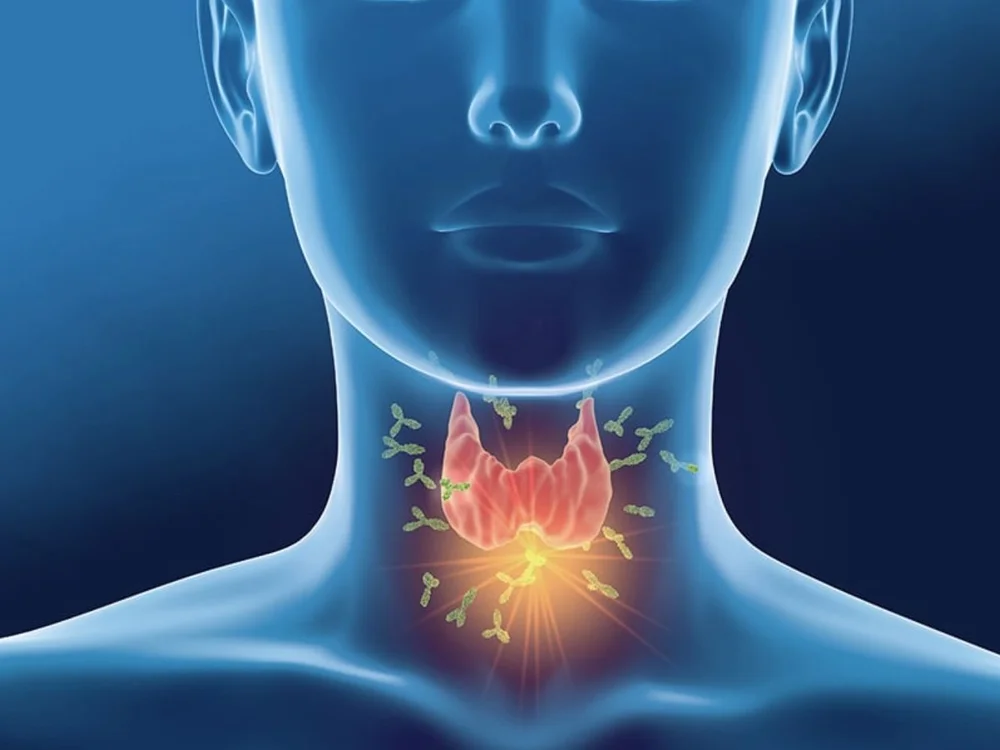
Dr. Hasan is experienced in evaluating diffuse and multinodular goiters, interpreting thyroid ultrasound, deciding when biopsy is needed, and coordinating surgery or radioactive iodine when a goiter is large, compressive or overactive.
Common questions
Is a goiter cancer?
Rarely. The risk of cancer in a multinodular goiter is similar to that of a single nodule, about 5 to 10 percent of nodules selected for biopsy. Ultrasound features decide which nodules need a biopsy.
Should I take iodine?
Not unless deficiency is confirmed. Excess iodine can worsen both Hashimoto's and Graves' disease. A normal diet with iodized salt is sufficient for most people.
Will my goiter keep growing?
Multinodular goiters grow slowly, often a few percent per year. Most never need surgery. Rapid growth, new hoarseness or swallowing trouble warrant prompt evaluation.
Related conditions
In Wexford or by telehealth in PA and OH