

Thyroid nodules · Ultrasound · Biopsy
Thyroid nodules, evaluated without alarm.
By age 60, more than half of adults have a thyroid nodule on ultrasound. More than 9 in 10 are benign. The job is to find the few that matter, and to leave the rest alone.
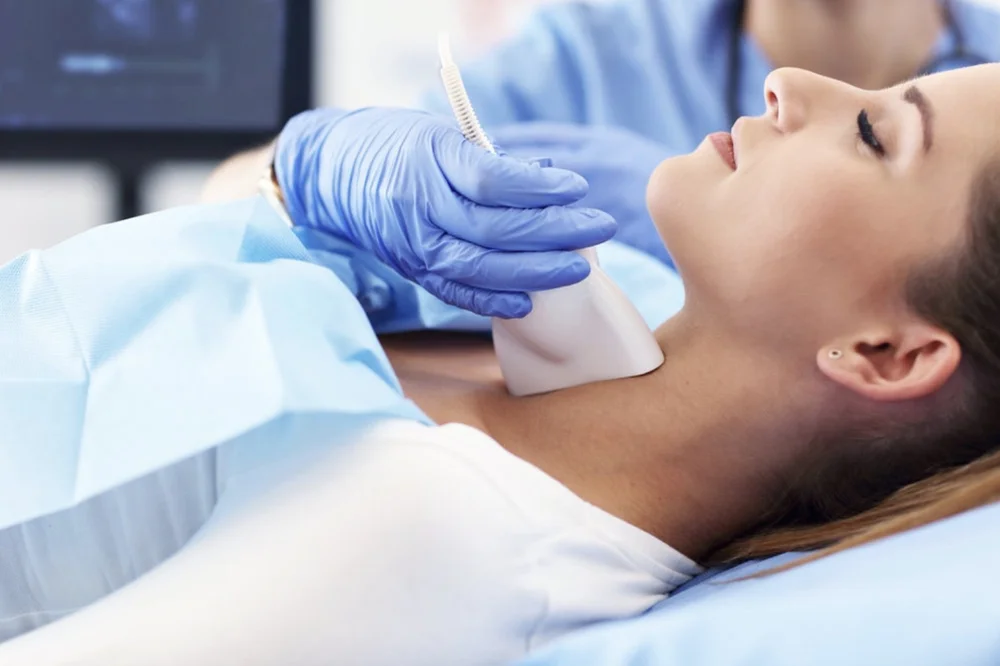
What a nodule is
A nodule is a lump of thyroid tissue that grows differently from the gland around it. Most are found by chance on a CT, MRI or carotid ultrasound done for another reason, or when a doctor feels the neck. A few are felt by the patient as a lump, a sense of pressure, or trouble swallowing. Nodules are more common in women, with age, after radiation exposure to the neck, and when iodine intake is low.
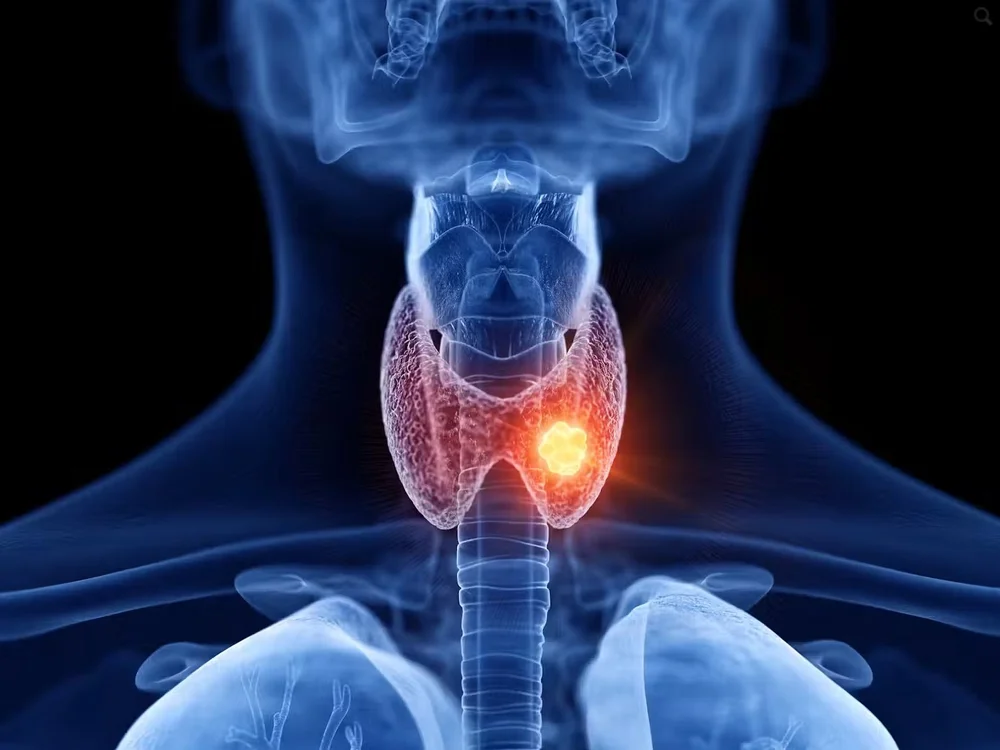
How nodules are evaluated
The workup follows a clear sequence, and most people finish it with reassurance rather than a procedure.
A low TSH points to a hot nodule. Suspicious ultrasound features at a modest size, or low-suspicion features at a larger size, lead to biopsy.
- Fine-needle aspiration uses a thin needle guided by ultrasound. It takes minutes, needs no sedation, and is read by a cytopathologist.
- Indeterminate results (about 1 in 5 biopsies) are clarified with molecular testing on the same sample, which avoids many surgeries.
- Benign nodules are followed with ultrasound at lengthening intervals and, when stable, often need no further imaging.
Treatment, when it is needed
Observation
Most benign nodules. Follow-up ultrasound at 1 to 2 years, then less often if stable.
Radiofrequency ablation
A needle-based treatment that shrinks benign nodules causing pressure or cosmetic concern, without removing the thyroid.
Radioactive iodine
For nodules that overproduce hormone and cause hyperthyroidism.
Surgery
For nodules that are cancerous or suspicious, very large, or compressing the airway, with an experienced thyroid surgeon.
Dr. Hasan is experienced in evaluating thyroid nodules, interpreting ultrasound risk features and molecular results, and coordinating biopsies, ablation and surgery with specialists when they are needed.
Common questions
Does a nodule mean cancer?
Rarely. About 5 to 10% of nodules that reach biopsy are cancerous, and most of those are slow-growing papillary cancers with an excellent outlook.
Will the nodule affect my thyroid hormone levels?
Usually not. Most nodules are quiet. A minority make excess hormone, which the TSH test detects.
Can a nodule shrink on its own?
Fluid-filled nodules sometimes do. Solid nodules tend to stay the same or grow slowly, which is why stability over time is reassuring.
Do I need to see a surgeon?
Only if the biopsy is suspicious or the nodule is causing symptoms that ablation cannot address. Most people never do.
Related conditions
In Wexford or by telehealth in PA and OH